Adjustable Beds · Mattress Education
Choosing a Mattress for an Adjustable Base: Fit, Flexibility, and Support
An adjustable base can raise the head, lift the legs, or bring both into a position that feels more comfortable. But the base can only do its work if the mattress bends with it, fits its dimensions, and stays supported as the surface moves. The right choice begins with compatibility—not a promise on a label, and not the assumption that every mattress can flex.
Published October 17, 2026
The base moves. The mattress has to move with it.
An adjustable bed changes the shape of the sleep surface by articulating at one or more points. Depending on the model, the head and foot sections may rise independently, and some bases add features such as head tilt or preset positions. A mattress placed on top must accommodate those bends without buckling, resisting the mechanism, sliding out of position, or developing damage from repeated movement.
That sounds straightforward until the details come into view. Two mattresses of similar thickness may behave very differently: one may flex readily while another is too rigid, too heavy, or too thick for the base’s design. Construction matters, but so do the base’s size and weight limits, the mattress dimensions, the bed frame, and the manufacturer’s instructions.
The most reliable rule is simple: confirm that the specific mattress and adjustable base are compatible before buying or setting them up together. General guidance about a material—latex, foam, or coils—is useful, but it cannot substitute for the manufacturers’ requirements. A compatible pairing is more likely to articulate smoothly and less likely to put avoidable strain on the base or mattress.
Start with the compatibility check
Before comparing comfort, check the documents for both components. Look for statements about adjustable-base use in the mattress warranty and care guide, then consult the base’s owner manual for approved mattress types, maximum dimensions, and weight limits. If the instructions are unclear, ask the manufacturer or retailer to confirm the exact combination in writing.
“Fits” can mean several things. A mattress may physically rest on the platform yet still be unsuitable for repeated articulation. A warranty may also impose conditions about the type of foundation, how the mattress is supported, or which base models may be used. Reading the fine print before purchase is less dramatic than discovering a problem later, but it is often more useful.
- Check mattress approval. Confirm that the mattress is intended for adjustable bases, rather than assuming flexibility based on its material or appearance.
- Check base capacity. Account for the mattress, bedding, and occupants together, and stay within the base’s stated weight limit.
- Match the size. Verify the mattress and base dimensions, including whether the setup uses a split configuration.
- Review warranty conditions. Make sure the chosen foundation and use pattern meet the mattress manufacturer’s requirements.
- Ask about restrictions. Find out whether the mattress can be used with massage features, particular positions, or a specific type of frame.
Dimensions deserve particular attention when an existing bed frame is involved. Some adjustable bases are designed to sit inside a platform or pedestal frame; others have clearance, leg, or support requirements. A frame can appear to fit while obstructing the base’s movement or limiting access to its mechanism. Check the base manual for clearance and installation instructions rather than improvising around the frame.
Flexibility is a matter of construction
Mattress flexibility is not a synonym for softness. A firm mattress may bend when it is engineered for articulation, while a plush mattress may resist movement because its layers are thick, tightly bonded, or reinforced in ways that limit bending. What matters is how the entire mattress responds when the base changes shape—not how the top feels under a hand in a showroom.
Foam and latex mattresses are often considered for adjustable bases because many designs can flex across the base’s hinge points. But materials vary, and a dense or unusually thick construction may behave differently from a thinner, more adaptable one. Check the specific product’s compatibility guidance rather than relying on a broad rule that all-foam or all-latex mattresses work.
Innerspring mattresses require closer scrutiny. Some have flexible pocketed coils and comfort layers designed to move with an adjustable platform; others rely on a structure that may be less suited to repeated bending. The presence of springs alone does not settle the question. Coil arrangement, perimeter reinforcement, upholstery, and overall build all affect how a mattress responds.
Hybrid mattresses combine coils with foam, latex, or other comfort materials. Their performance depends on the interaction among those layers. A flexible coil unit may be paired with a comfort system that bends readily—or with a thick, rigid construction that does not. Look for explicit adjustable-base approval and, where possible, information about the base positions the mattress is designed to accommodate.
Rigid or unusually inflexible designs can be a poor match if they cannot follow the platform’s shape. A mattress that bridges over a raised section may leave gaps beneath it; one that presses hard against the hinges may place stress on the base. Neither outcome is a reliable measure of comfort, and neither should be dismissed as normal without checking the manufacturers’ guidance.
Thickness, weight, and the mechanics of movement
Mattress thickness affects both the way a bed feels and the way it articulates. A deeper mattress can add cushioning, but it may also be harder for a particular base to bend or may exceed a stated limit. No universal thickness guarantees compatibility: limits vary by model, so the base manual and mattress specifications are the appropriate references.
Weight matters for a related reason. The base must lift the combined load, and that load includes more than the mattress alone. A heavy mattress, bedding, and the people using the bed all contribute. If the system seems slow, strained, or uneven, stop operating it and consult the manual or manufacturer; do not assume the motor should simply be pushed harder.
Mattress retention is another practical detail. Many adjustable bases use a retainer bar or another feature to help keep the mattress in place while the head or foot section rises. Confirm that the mattress sits within the base as intended and that any retention components are installed correctly. A mattress that creeps toward the foot of the bed can interrupt sleep and may signal that the setup needs adjustment.
Pay attention to the complete profile, including thick toppers or added layers. A topper may change the effective height and movement of the sleep surface, even if the mattress itself is approved. Ask whether accessories are allowed, and check that fitted sheets and protectors do not bind the mattress so tightly that they restrict movement.
Comfort and support still come first
A technically compatible mattress is not automatically a comfortable one. The adjustable base changes position; it does not remove the need to choose a mattress that suits the sleeper’s preferences and needs. Firmness, pressure relief, temperature, motion transfer, and the feel of the perimeter remain important when the bed is flat and when it is raised.
Think about the positions you expect to use. Raising the head for reading or relaxing changes how the upper body meets the mattress. Elevating the legs changes the feel under the hips and lower body. A mattress that feels acceptable when flat may feel different when articulated, so test the positions you are likely to use if a return or trial policy makes that possible.
Support is about how the mattress responds to the sleeper, not simply whether it feels hard. Consider whether the surface keeps the body comfortably supported without unwanted pressure or a sense of sagging. If two people share the bed, consider whether each person has different preferences or needs. A split adjustable setup may allow independent movement, but it also requires careful attention to mattress dimensions and the configuration of the base.
Edge stability can matter more on an adjustable bed than shoppers expect. A stable perimeter can make getting in and out feel more secure and can preserve usable sleeping space. Yet edge support may behave differently when a section is elevated, depending on the mattress construction and base. Test the edge in the positions you intend to use, and check product guidance for any limitations.
A practical example: a flexible latex option
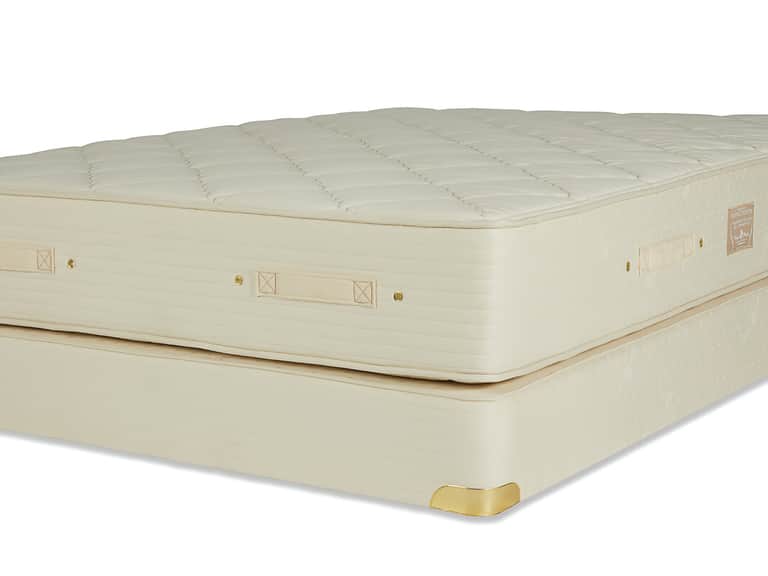
Some product descriptions explicitly address adjustable-base use. The Royal-Pedic Natural Latex Quilt-top Mattress with German Stretch Knit ticking, for example, is described as suitable for an adjustable bed base. Its listed construction includes an approximately eight-inch natural latex core, with a firm latex layer and a medium layer, as well as wool and cotton components.
That stated compatibility makes it relevant to this category, but it does not remove the need to verify the particulars. Confirm that the mattress size, base model, weight limits, installation requirements, and warranty terms align for your intended setup. A product’s general approval for adjustable use does not mean that every base or every configuration is automatically appropriate.
Likewise, a base’s features do not establish mattress compatibility on their own. The The Clean Bedroom (Level 3) Adjustable Bed Base listing describes independent head and foot adjustment, head tilt, and several preset positions. Those features may be useful to consider, but the base’s manual remains the authority on approved mattress dimensions, weight limits, and operating requirements.
Test the pairing before committing
If possible, evaluate the mattress and base together rather than treating them as separate purchases. Begin with the bed flat. Check that the mattress lies evenly on the platform, is correctly aligned, and is held in place by any supplied retainer. Then raise the head and foot gradually, following the base instructions. Watch for shifting, bunching, unusual gaps, or signs that the mattress is resisting the movement.
Repeat the test in ordinary positions rather than cycling through every feature for its own sake. Sit up to read, raise the legs if that is part of your routine, and return the bed to flat. Notice whether the mattress stays centered and whether the transition feels smooth. If the base has a massage function, consult its guidance about using that feature with the selected mattress.
In a store, a brief test cannot predict years of use, but it can reveal obvious mismatches. At home, a trial period may offer more time to assess comfort, provided you understand its terms. Ask about return fees, pickup arrangements, trial duration, and any requirements that apply to adjustable-base use. Keep the receipts and product documentation together; they can help resolve questions about setup and coverage.
Do not continue testing if the base strains, the mattress shifts substantially, or the mechanism appears obstructed. Return the platform to the position specified by the manual, if safe to do so, and contact the manufacturer or installer. Unusual noises, repeated slipping, or uneven movement merit investigation rather than guesswork.
Care that protects the setup over time
A compatible pairing still needs sensible use. Follow the base maker’s instructions for weight distribution, operation, and cleaning. Avoid placing objects beneath the mechanism where they could interfere with movement, and keep cables or bedding clear of moving sections. If the base has a lockout or child-safety feature, learn how it works before regular use.
Rotate or turn a mattress only when its manufacturer allows it. Some mattresses are designed for rotation; others have a one-sided construction and should not be flipped. On an adjustable base, the wrong maintenance routine can make the surface less comfortable or complicate how it follows the platform. The care label and owner guide are more dependable than a generic schedule.
Inspect the setup occasionally. Check that the mattress remains aligned, that the retainer is secure, and that the base has not shifted within its frame. Review the mattress and base manuals if you move the bed, change its frame, add a topper, or alter the way it is used. Small changes can affect fit and clearance.
A buyer’s checklist
Before choosing a mattress for an adjustable base, use this short list to keep the decision grounded in fit as well as feel:
- Confirm the mattress is approved for adjustable-base use.
- Confirm the base accepts the mattress’s size and construction.
- Check maximum mattress thickness and total weight limits in the base manual.
- Review warranty terms for both products, including required foundations or setup conditions.
- Measure the frame and available clearance, especially if the base will sit inside existing furniture.
- Check how the mattress is retained and whether the required bar or hardware is included.
- Test the bed flat and raised, paying attention to shifting, gaps, edge feel, and comfort.
- Ask how toppers, protectors, split configurations, and massage features affect compatibility.
- Understand the trial, return, delivery, and service terms before ordering.
The right answer is the documented pairing
The search for the best mattresses for adjustable beds is not settled by a single material, firmness rating, or marketing phrase. A good match combines a mattress that is explicitly suitable for articulation with a base that can support its dimensions and weight. It also has to feel right to the person sleeping on it, both when flat and when raised.
That makes the decision less mysterious than it first appears. Check the manuals, verify the measurements, ask direct questions, and test the movement. Flexibility allows the mattress to follow the platform; sound support and comfort make the resulting position worth using. When fit, flexibility, and support are considered together, an adjustable base can serve as a practical part of the sleep setup rather than an experiment in bedroom mechanics.