Mattress Education
Why Latex Matters When Choosing a Mattress for an Adjustable Bed
An adjustable bed changes the shape of the sleep surface—and asks the mattress to change with it. Latex is often considered for this job because it can bend while retaining a responsive feel. But the material’s name alone cannot guarantee compatibility. Construction, thickness, weight and the base maker’s guidance all matter.
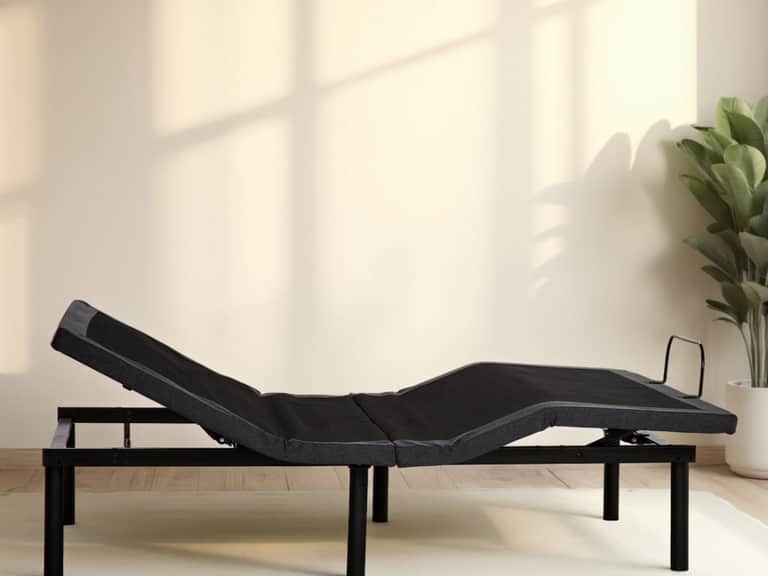
An adjustable bed does something a fixed platform cannot: it lifts the head, raises the legs or moves both sections to create a new resting position. The motion can be useful for reading, watching television or simply finding a posture that feels more comfortable. It also changes the demands placed on a mattress. As the base articulates, the mattress must flex without buckling, shifting excessively or resisting the movement.
Latex enters the conversation because it is resilient. Unlike a material that slowly yields under pressure, latex generally compresses and rebounds promptly. That spring-like response can help a mattress follow the changing contours of an adjustable base. Yet latex mattresses are not all built alike. A thick, heavy mattress with a rigid perimeter or multiple layers may behave differently from a simpler, more flexible design—even if both use latex.
The practical lesson is straightforward: think of compatibility as a property of the complete mattress-and-base setup, not a promise made by one material. Before buying, check the mattress manufacturer’s instructions, confirm the adjustable base’s weight and size limits, and ask whether the exact mattress model is approved for articulation.
What an adjustable base asks of a mattress
A conventional mattress rests on a largely flat foundation. An adjustable base introduces moving sections, usually beneath the head and legs. When those sections rise, the mattress bends at one or more points. It must accommodate those changes while remaining properly positioned and supported.
That movement can reveal construction issues a flat bed conceals. A mattress that is too stiff may not follow the base smoothly. One that is unusually thick or heavy may place added load on the mechanism, depending on the base’s design and capacity. A mattress with a less flexible border, tightly bound layers or a construction intended only for a rigid foundation may resist articulation or fail to settle back into place as expected.
Neither a heavier feel nor a thicker profile is automatically a problem. The question is whether the mattress and base were designed to work together. Adjustable bases vary, as do mattresses; two products that appear similar may have different permitted uses. Manufacturer guidance is therefore more useful than assumptions based on category labels or showroom impressions.
Why latex is often considered
Latex is valued for a combination of contouring and buoyancy. Under pressure, it compresses; when pressure eases, it tends to recover. That resilience gives many latex mattresses a responsive feel, sometimes described as buoyant or springy. On an adjustable base, the same capacity to yield and rebound may help the mattress adapt as the deck changes position.
Latex can also feel different from memory foam. Memory foam is often associated with a slower, more gradual response to pressure, while latex commonly responds more quickly. Neither response is universally better. Some sleepers prefer the close, slow contour of memory foam; others like the easier repositioning associated with a more buoyant surface. Personal comfort remains important, even when the bed’s mechanics are the immediate concern.
But “latex” describes a material family, not a complete construction specification. A mattress may use latex in one layer or throughout much of its core. It may combine latex with cotton, wool, foam or other materials. Cover fabrics, quilting, adhesives, edge treatments and the arrangement of layers also affect how the finished mattress bends. A latex comfort layer over a stiff support system may not flex like an all-latex mattress, and neither design can be judged reliably from the word on a label alone.
Natural, synthetic and blended latex
Latex may be made from natural rubber, synthetic materials or a blend. The distinctions can matter to shoppers evaluating materials, sourcing or preferences, but they do not by themselves settle adjustable-bed compatibility. A natural latex core is not automatically suitable for every base, and a synthetic or blended construction is not automatically unsuitable. The relevant question is whether the manufacturer approves the specific mattress for use on an adjustable foundation.
People interested in natural materials may also want to examine the mattress’s complete bill of materials and any certifications provided by the maker. A product description that highlights natural latex does not necessarily describe every layer, cover component or processing detail. Read the specification carefully, and distinguish material claims from mechanical compatibility claims: they answer different questions.
The details that deserve a closer look
Before choosing a latex mattress for an adjustable bed, gather the specifications for both products. A useful review focuses on the whole assembly rather than a single headline feature.
- Explicit compatibility guidance: Look for a clear statement from the mattress maker that the model can be used on an adjustable base. Check the base maker’s instructions as well, especially if either product has restrictions.
- Thickness and construction: Note the mattress’s total profile and how its layers are arranged. Thickness alone does not determine flexibility, but the complete build can affect how readily it bends.
- Weight: Compare the mattress weight, together with the weight of sleepers and bedding, against the base’s stated capacity. Do not assume the motor can support every mattress simply because the size matches.
- Dimensions and fit: Confirm that the mattress size corresponds to the base. Split or independently moving configurations may require particular mattress dimensions or a specific setup.
- Flexibility and return to flat: If possible, test the mattress on the intended base. Observe whether it follows the moving sections smoothly and lies evenly when the base returns to a flat position.
- Edge and cover construction: Ask whether firm perimeter components, quilting or other structural features affect articulation. These details are not always obvious from a product title.
- Warranty terms: Review the mattress and base warranties separately. Confirm whether using the mattress on an adjustable base is permitted and whether the base must meet specific requirements.
These checks can prevent a frustrating mismatch. They also help separate a comfort question from a technical one. A mattress might feel pleasant in a store but still be unsuitable for a particular base; another might be mechanically compatible but not deliver the pressure relief or firmness a sleeper prefers.
A real-world example: a latex mattress listed for adjustable use
The Royal-Pedic Natural Latex Quilt-top Mattress with German Stretch Knit ticking is described as having an approximately eight-inch natural latex core, with a firm latex layer and a medium layer, and as suitable for use on an adjustable bed base. That explicit compatibility statement is more useful than inferring suitability from the word “latex” alone.
Even in this case, shoppers should verify that the particular base they plan to use is appropriate. The mattress description addresses the mattress; the adjustable base has its own capacity, size requirements and operating instructions. It is sensible to confirm the details with both manufacturers before purchase, particularly if the setup involves a split configuration, an unusual frame or accessories that add weight.
This is not a universal endorsement of one design. It is an example of the kind of product information to seek: a named mattress, a description of its construction and a direct statement about adjustable-base use. Clear specifications make comparison more practical and reduce reliance on guesswork.
How to evaluate the feel, not just the fit
Once compatibility is established, comfort becomes the central question. An adjustable base changes posture, but it does not automatically make a mattress supportive. A sleeper’s preferred firmness, body shape and usual sleep position still influence how the surface feels. The same latex mattress may feel different to different people, and changing the head or foot angle can alter pressure and contact points.
If a retailer or showroom allows it, test the mattress while the base is both flat and articulated. Try the positions you expect to use regularly. Notice whether the surface remains comfortable, whether you feel supported through the hips and shoulders, and whether moving on the mattress feels natural. A brief test is not a guarantee of long-term comfort, but it can reveal obvious concerns before delivery.
For online purchases, examine trial periods, return conditions and delivery arrangements. Ask whether the mattress must be used with a particular type of foundation during the trial. Keep written records of compatibility guidance and warranty terms. Policies vary, and a generous comfort trial does not necessarily override restrictions on how the product may be supported.
Common assumptions that can lead shoppers astray
“Latex bends, so any latex mattress will work.” Resilience is relevant, but mattress construction differs. Compatibility must be confirmed for the complete model and the particular base.
“A mattress that fits the dimensions will fit the mechanism.” Correct length and width are essential, but they do not confirm that the mattress’s weight or construction is within the base’s limits.
“The mattress maker’s approval covers every adjustable base.” A manufacturer may specify conditions or exclusions. The base maker may set separate requirements, so both sets of instructions matter.
“More layers mean more comfort and flexibility.” Layer count alone says little about how a mattress will articulate. Materials, thickness, construction and attachment methods all contribute to the finished product’s behavior.
“A mattress that bends once is compatible.” The goal is not simply to make it bend. It should operate as intended within the base’s limits, remain positioned, and return to a suitable flat surface without undue strain.
Pairing a mattress with a base: a practical sequence
Start by deciding whether the adjustable base itself meets your needs. Check its dimensions, movement options, weight capacity and compatibility requirements. If the base is already purchased, record its model and consult its manual before shopping for a mattress. If you are choosing both together, compare their specifications side by side rather than treating either as a separate purchase.
Next, shortlist mattresses that explicitly permit adjustable-base use. Ask about the construction and total weight if those details are not easy to find. Confirm whether the base’s articulation style, any split arrangement and the intended bed frame are covered. Then review warranties and trial policies. Finally, assess comfort using a store test or a clearly stated home trial, understanding that comfort and mechanical compatibility are related but distinct considerations.
- Identify the exact adjustable-base model and read its operating and compatibility instructions.
- Choose mattress candidates with clear, model-specific guidance for adjustable use.
- Compare mattress weight and dimensions with the base’s stated limits.
- Ask how the mattress construction responds to articulation and whether any setup conditions apply.
- Verify warranty coverage and return terms for the combined setup.
- Test the mattress in the positions you expect to use, if practical.
Care and everyday use
Follow the operating guidance supplied with the base. Avoid exceeding its stated capacity, and keep bedding and accessories from obstructing moving sections. If the mattress begins to shift, looks uneven or no longer follows the base normally, return the bed to a flat position and check the manufacturer’s instructions. Do not force a mattress or mechanism into a position that feels resistant.
Use only the care methods specified by the mattress maker. Rotating or flipping may be recommended for some designs and inappropriate for others, especially when layers are arranged in a particular order. A mattress protector can help guard the surface from ordinary spills and soil, but it should not be so tight or rigid that it interferes with the mattress’s movement. When in doubt, ask the manufacturer rather than relying on a general rule.
The bottom line
Latex can be a promising material for an adjustable bed because its resilient feel may allow it to flex and recover as the base moves. That quality makes it worth considering—not automatically compatible. A mattress’s layers, profile, weight and structural details all influence its behavior, while each adjustable base has its own limits and requirements.
The best decision is grounded in specific information. Confirm that the exact mattress model is approved for adjustable use, check the base’s instructions and capacity, and evaluate the resulting feel in the positions that matter to you. Latex may provide the flexibility a shopper is seeking, but the reliable answer comes from matching the complete mattress to the complete system.